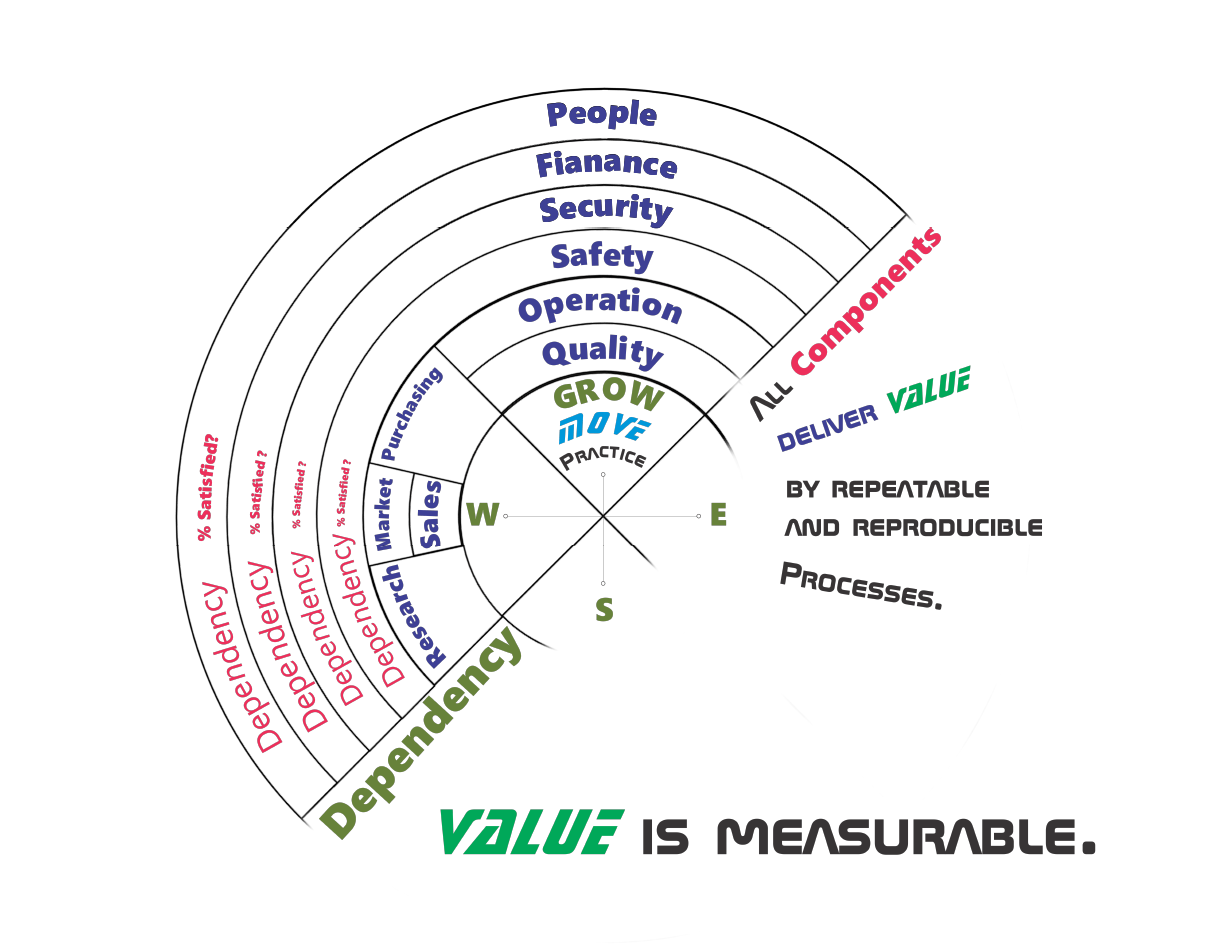
Alignment Diagnostic
Alignment Pattern Library
The following cases represent patterns observed across organizations when expectations, authority, and execution drift out of alignment.
These patterns are more common than expected—and tend to persist until addressed.
Some organizations experience a constant cycle of urgent
problems. Issues appear, teams respond quickly, and operations continue moving,
but the underlying conditions that produce those issues remain difficult to
see.
Over time, attention shifts toward resolving the latest problem rather than understanding why the pattern continues. Urgent work begins to override learning, and firefighting becomes part of how the organization operates.
Condition failure
No clear mechanism exists for identifying or learning from root causes.
Compensation introduced
Leaders and teams react quickly to symptoms to keep operations moving.
Dependency normalized
Urgent problem-solving begins to replace structured learning.
Shelf-life failure
Firefighting becomes an accepted operating habit rather than a signal to
examine system design.
Most alignment problems become easier to resolve once the underlying conditions are visible.
If this pattern resembles your situation, you can reference this case when starting a conversation.
Organizations often launch capacity initiatives when growth pressure or financial urgency increases. New tools, automation, or process improvements are introduced with the expectation that technical progress will quickly translate into improved results.
However, the connection between operational activity and
financial impact is not always visible. Teams continue making progress on
technical tasks, but the expected outcomes remain delayed. Over time, motion
itself begins to substitute for measurable results.
Condition failure
Cash urgency and operational execution are not clearly connected.
Compensation introduced
Technical progress and project activity continue in place of outcome
visibility.
Dependency normalized
Leaders begin to rely on signs of motion rather than confirmed results.
Shelf-life failure
Financial relief remains delayed despite sustained effort.
Most alignment problems become easier to resolve once the underlying conditions are visible.
If this pattern resembles your situation, you can reference this case when starting a conversation.
Leadership teams often review portfolio performance through
activity reports, progress updates, and milestone tracking. These reviews can
create visibility into what teams are doing, but they do not always reveal
whether the work is connected to financial outcomes.
When operational priorities are not linked clearly to cash
impact, progress can appear steady even while critical gaps remain unresolved.
Over time, activity becomes the primary indicator of progress.
Condition failure
Operational priorities are not explicitly linked to cash outcomes.
Compensation introduced
Activity and milestone updates substitute for financial impact visibility.
Dependency normalized
Leadership becomes comfortable interpreting progress through effort.
Shelf-life failure
Critical financial gaps persist without escalation.
Most alignment problems become easier to resolve once the underlying conditions are visible.
If this pattern resembles your situation, you can reference this case when starting a conversation.
Many organizations strengthen governance only after a
disruption has occurred. New procedures, oversight practices, or reporting
structures are introduced in response to a visible problem.
While these changes can stabilize the situation, the
underlying learning often arrives after damage has already been done. Over
time, governance improvements become reactive rather than preventative.
Condition failure
Preventative learning mechanisms are not embedded into governance structures.
Compensation introduced
Recovery and corrective action follow each disruption.
Dependency normalized
Leadership adapts to cycles of decline followed by stabilization.
Shelf-life failure
Governance improvements arrive only after problems surface.
Most alignment problems become easier to resolve once the underlying conditions are visible.
If this pattern resembles your situation, you can reference this case when starting a conversation.
Organizations often introduce new tools or systems with the
expectation that improved technology will create alignment. Teams receive
access to the tool, training sessions occur, and implementation milestones are
reached.
However, when alignment expectations are not clearly
connected to daily behavior, teams often develop workarounds that allow them to
continue operating in familiar ways. Over time, the tool itself becomes the
focus of blame rather than the conditions surrounding its use.
Condition failure
Alignment expectations are mistaken for tool installation.
Compensation introduced
Teams continue existing workflows alongside the new system.
Dependency normalized
Workarounds replace intended system behavior.
Shelf-life failure
The tool is gradually abandoned or blamed for misalignment.
Most alignment problems become easier to resolve once the underlying conditions are visible.
If this pattern resembles your situation, you can reference this case when starting a conversation.
Organizations often seek expert input to improve decisions
and reduce risk. However, consultation sometimes occurs after commitments have
already been made.
When expertise is introduced after direction is set, the
role of the advisor shifts from influencing decisions to interpreting or
translating them. Over time, expertise becomes a mechanism for supporting
predetermined outcomes.
Condition failure
Expert input occurs after strategic commitments are already established.
Compensation introduced
Advisors help interpret or justify existing decisions.
Dependency normalized
Expertise becomes a support function rather than an influence on direction.
Shelf-life failure
The advisor’s leverage gradually narrows.
Most alignment problems become easier to resolve once the underlying conditions are visible.
If this pattern resembles your situation, you can reference this case when starting a conversation.
Leadership teams often spend significant time discussing
improvements, analyzing performance, and identifying opportunities for change.
These conversations can produce strong insights and shared understanding.
However, when insights are not paired with clear ownership
or consequences, discussion itself begins to substitute for action. Over time,
the organization becomes comfortable with clarity that does not lead to change.
Condition failure
Insight is not paired with defined ownership or consequence.
Compensation introduced
Discussion and analysis substitute for implementation.
Dependency normalized
Leadership relies on conversation to maintain momentum.
Shelf-life failure
Improvement efforts stall despite clear understanding.
Most alignment problems become easier to resolve once the underlying conditions are visible.
If this pattern resembles your situation, you can reference this case when starting a conversation.
Some organizations rely heavily on facilitators to maintain
structure in meetings, projects, or strategic discussions. Preparation
increases, agendas become more detailed, and facilitation effort expands to
keep conversations productive.
While these efforts can maintain momentum, they may also
mask underlying authority or ownership gaps. Over time, the facilitator becomes
responsible for sustaining progress.
Condition failure
Authority and ownership expectations are not clearly aligned.
Compensation introduced
Facilitators increase preparation and structure to maintain progress.
Dependency normalized
Momentum becomes dependent on facilitation effort.
Shelf-life failure
Facilitator energy becomes the limiting factor.
Most alignment problems become easier to resolve once the underlying conditions are visible.
If this pattern resembles your situation, you can reference this case when starting a conversation.
Organizations often defer difficult decisions when timing
feels uncertain. Leaders may agree that an issue is important but decide to
revisit it in the next planning cycle or quarter.
When deferral becomes a common response to unresolved
issues, time itself begins to function as a buffer. Over time, problems persist
safely within future planning windows.
Condition failure
Decision thresholds are not clearly defined.
Compensation introduced
Deferral replaces resolution.
Dependency normalized
Leadership relies on future timelines to manage present uncertainty.
Shelf-life failure
Strategic issues remain unresolved across multiple cycles.
Most alignment problems become easier to resolve once the underlying conditions are visible.
If this pattern resembles your situation, you can reference this case when starting a conversation.
Organizations sometimes assign responsibility for outcomes
without granting the authority needed to influence the underlying system.
Individuals become accountable for results while key decisions remain
elsewhere.
To meet expectations, those individuals often escalate
issues, negotiate for support, or compensate through additional effort. Over
time, escalation loops replace clear decision pathways.
Condition failure
Responsibility is separated from decision authority.
Compensation introduced
Escalation and negotiation substitute for direct control.
Dependency normalized
Progress depends on navigating authority gaps.
Shelf-life failure
Organizational friction increases and decision speed declines.
Most alignment problems become easier to resolve once the underlying conditions are visible.
If this pattern resembles your situation, you can reference this case when starting a conversation.